
What are the Different Types of Conveyor Machines?
04/25/2025
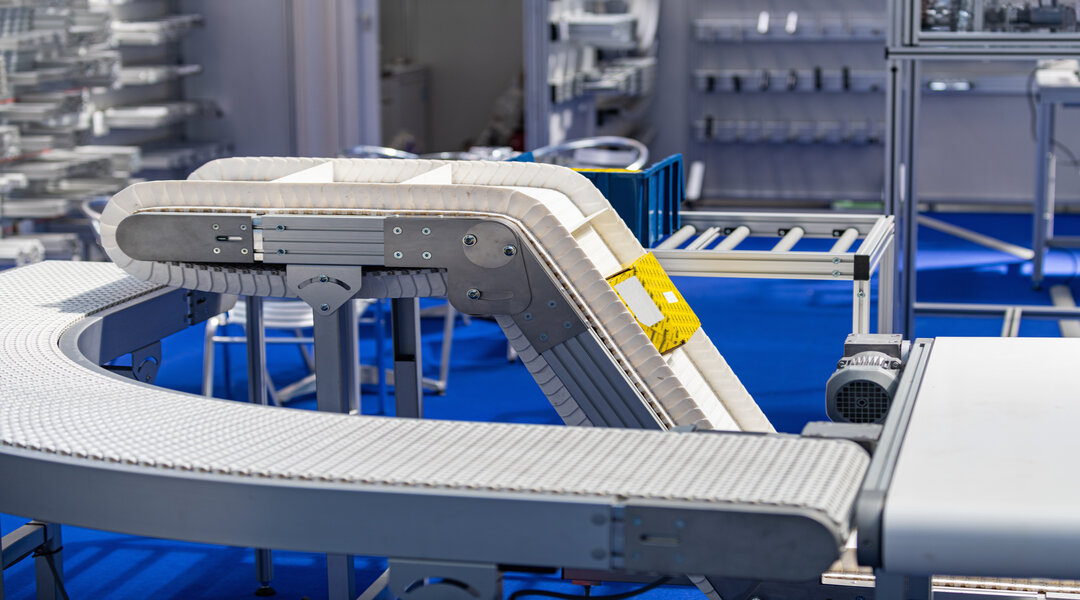
Selecting the right conveyor system for your production line doesn’t need to be a guessing game. Whether you're moving small components, heavy pallets, or packaged goods, there's a purpose-built conveyor solution that can increase efficiency and reduce downtime.
The ideal conveyor setup depends on several key factors—load weight, material type, facility layout, and speed requirements. Some systems are tailored for fragile products, others are engineered for rugged, high-volume operations. Each conveyor type—belt, roller, chain, overhead, screw, and more—brings unique advantages.
Let’s break down the most common conveyor systems so you can choose the right fit for your workflow, facility space, and production goals.
Belt Conveyor Machines for Versatile Material Handling
Belt conveyors are among the most widely used material handling systems, and for good reason. Their versatility allows them to transport everything from loose components to packaged goods with minimal product damage and high operational efficiency.
These systems operate via a continuous belt loop running over pulleys, delivering a smooth, controlled flow of materials. They’re ideal for general-purpose use across industries like packaging, food production, assembly, and logistics.
One of their strongest advantages is modularity. Belt conveyors can be custom-built to match your facility’s footprint and evolving production demands. Need integrated speed control or changeable layouts? These systems adapt easily. And with quality parts, maintenance stays low-impact and budget-friendly.
They also support inclines and declines, though steep angles may require additional cleats or support rails. For the best performance, GLOBALTEK® offers custom-configured belt conveyors engineered around your exact application, throughput, and floor layout.
Roller Conveyors in Industrial Applications
Roller conveyors are built for streamlined material movement with minimal manual input. Whether you're running a packaging line or managing high-volume distribution, these systems keep your process flowing with precision and minimal strain on your workforce.
How They Work:
- Robust Frame Construction: Most roller conveyor frames are constructed from industrial-grade steel, supporting consistent alignment and long-term use. Evenly spaced rollers reduce friction and increase flow efficiency across the line.
- Gravity-Based Systems: For lighter items, gravity roller conveyors let operators manually guide products with minimal effort. Common in shipping and staging zones, they help accelerate throughput while lowering the risk of repetitive strain.
- Powered Rollers: For heavier loads, motor-driven rollers automate transport and integrate seamlessly with labeling, scanning, or packing systems. They're ideal for high-throughput operations and reduce reliance on manual labor.
Chain Conveyor Systems for Heavy Loads
Chain conveyors are built to move oversized or awkwardly shaped loads that exceed the limits of standard systems. Using interlinked steel chains and reinforced frames, these systems provide consistent speed and reliable transport, ideal for demanding industrial environments.
They’re commonly used for transporting heavy materials over long distances, especially when product orientation and load stability are critical. Many setups include adjustable tensioning mechanisms and heavy-duty drives to maintain optimal chain alignment and uptime.
Chain conveyors thrive in high-load applications like pallet handling, automotive assembly, and material transfer between production stages. Their durable design reduces breakdown risk, while their linear pathing helps maximize floor efficiency by linking multiple operations along a single run.
Overhead Conveyors and Their Unique Uses
Overhead conveyors are used in operations where floor space is limited and vertical movement is essential. While GLOBALTEK® does not manufacture overhead conveyor systems, these solutions can complement floor-based conveyors in certain environments.
They're Commonly Used for:
- Accumulating lightweight goods in high-density spaces
- Moving products between workstations without disrupting foot traffic
- Reducing floor congestion in cleanrooms or food-safe applications
Screw Conveyors for Bulk Material Movement
Screw conveyors—also known as auger conveyors—are commonly used to move dry bulk materials like grain, powder, or flour in a controlled flow. They’re built around a rotating screw housed in a U-shaped or tubular trough, ideal for applications in food processing, agriculture, and chemical handling.
While GLOBALTEK® does not manufacture screw conveyors, we understand their role in certain specialized material handling environments. If your facility requires bulk powder movement, these systems are best suited for:
Shorter pitch screws: better for abrasive or heavy materials
Ribbon flights: designed to move sticky or viscous substances
Screw conveyors can be mounted horizontally, vertically, or at an incline depending on layout constraints. Some facilities integrate them alongside belt or chain systems as part of a broader material transfer process.
Pneumatic Conveying Solutions with Precision Control
Pneumatic conveyor systems use controlled air pressure to move fine or lightweight materials through enclosed tubing. These systems are commonly found in industries that demand a sterile, dust-free environment, such as pharmaceuticals, food processing, and chemical production.
While GLOBALTEK® does not produce pneumatic conveying systems, we recognize their role in niche applications involving powders, granules, and fragile materials. Common benefits include:
Precision Airflow Monitoring: Integrated sensors help maintain optimal flow rates, ensuring consistent material movement and reducing energy consumption.
Gentle Handling: Pneumatic transfer minimizes physical contact with the product, lowering the risk of contamination or breakage.
Adaptable Routing: These systems can navigate tight or complex facility layouts, offering flexibility for future line expansion.
Which Conveyor System is Right for You?
Each conveyor system serves a distinct purpose, and the right one depends on your material type, throughput needs, and facility layout.
Belt conveyors handle general-purpose applications with flexibility.
Roller systems support packaging, shipping, and accumulation.
Chain conveyors move heavy-duty loads across long production lines.
But conveyor systems aren’t just about transport—they’re about eliminating bottlenecks, reducing labor strain, and maximizing uptime. The smartest investments start with a clear understanding of your workflow challenges.
Whether you're optimizing an existing layout or planning a new buildout, GLOBALTEK® provides fully customized conveyor solutions built for performance, scalability, and long-term reliability. Our engineering team partners directly with your operation to ensure every system is built to spec—and built to last.
Let’s build smarter. Start streamlining your material handling today.
Comments
No posts found