
Key Compliance Factors for GLOBALTEK® Conveyor Systems
09/11/2026
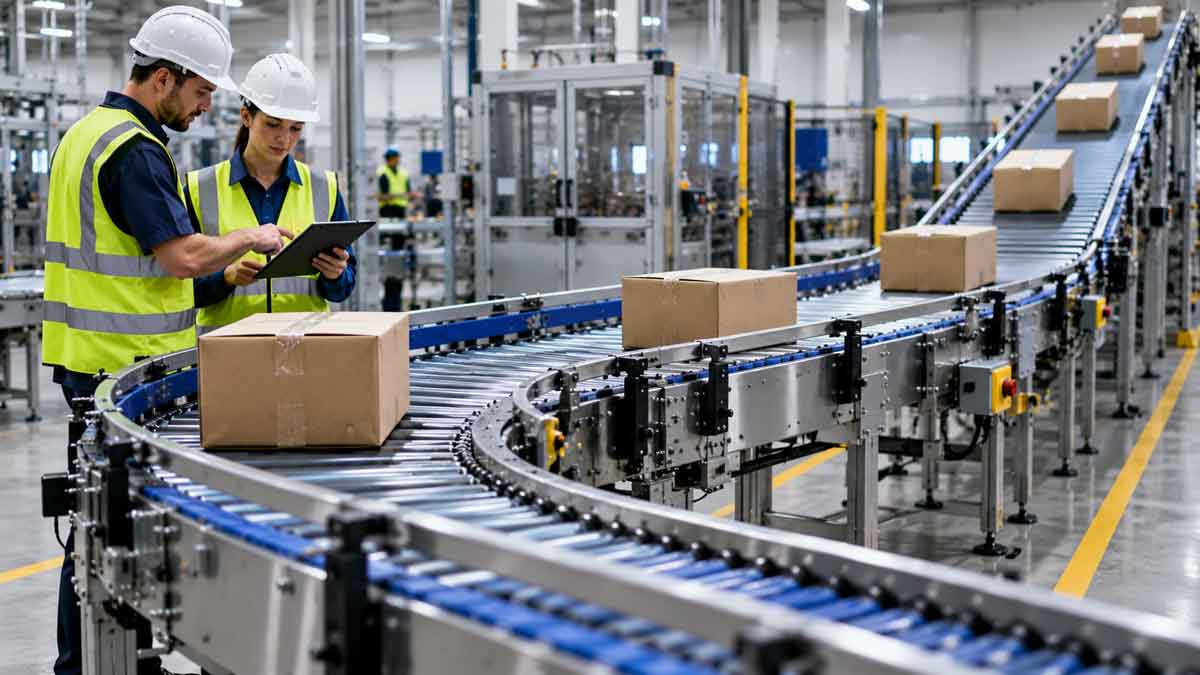
Staying ahead of compliance standards supports consistent operation, product integrity, and production quality. Conveyor equipment manufacturers must track several key areas to maintain reliable performance throughout fabrication, installation, and daily operation.
Packaging equipment, including conveyor systems, requires appropriate materials and documentation throughout fabrication and assembly. Our customers also benefit from incorporating applicable OSHA guidelines into daily production practices, helping support organized workflows, operator training, maintenance, and line flexibility.
Environmental and facility requirements can also affect many sectors served by automated conveyors, especially those managing food or pharmaceutical ingredients on-site. Certification programs specific to equipment can provide third-party validation where applicable, supporting documentation throughout the supply chain and helping plant teams maintain confidence in their equipment.
Many plant managers request energy-efficient designs up front due to high utility costs. We support smooth performance by focusing on practical system engineering, appropriate equipment selection, cleanable construction, and effective maintenance routines that align with the requirements of the application.
Adhering to Applicable Safety Regulations
Adhering to applicable safety rules is key for conveyor equipment makers. OSHA requirements provide guidance for maintaining appropriate working conditions around production equipment, while facility-specific procedures help operators and maintenance teams work consistently around integrated conveyor systems for packaging.
Equipment design plays an important role in supporting these procedures. Enclosed frames, appropriate guarding, accessible components, and UL-certified components can help create an organized operating environment while supporting maintenance and system reliability.
Site-specific requirements should also be considered during equipment planning and installation. Production layouts, access points, maintenance areas, and connections between Conveyor Systems and other Packaging Equipment all influence how a system should be configured.
For facilities operating in regulated industries, compliance should be addressed as part of the complete system design rather than treated as a separate step after installation. Our engineering approach considers the production floorplan, equipment interfaces, operating requirements, and applicable standards when developing a conveying solution.
This system-level approach supports smooth operation and gives plant teams a clearer framework for maintaining equipment, documenting procedures, and integrating new systems into established production environments.
Ensuring Material Compliance and Traceability
Tracing materials through each step is key for conveyor manufacturers working with regulated industries. It makes product documentation, supplier accountability, and clear process records possible.
Batch Labeling and Documentation: Clear labeling and documentation can identify manufacturer details, lot information, and receipt records for conveyor system parts. This traceability helps teams locate relevant equipment information when questions arise. For sectors like food or pharma, organized documentation can support the facility's broader quality and record keeping requirements.
Quality Assurance and Corrective Action: With appropriate traceability, you can identify components used in a Packaging Equipment line if an issue is found. Detailed records help maintenance and engineering teams review the equipment involved and determine appropriate corrective action without unnecessarily disrupting the broader production system.
Supply Chain Ethics and Transparency: Material traceability also helps manufacturers respond to customer and regulatory expectations for transparency. When components of Rotary Equipment are properly documented, production teams have clearer information about the equipment's construction, sourcing, and maintenance history.
Implementing OSHA Standards in Production
Implementing applicable OSHA standards in production helps manufacturers maintain organized operating practices around Conveyor Systems and Packaging Equipment. These steps help you and your team stay on track, maintain output, and keep safety integrated into production.
Identify Applicable OSHA Rules: Start by confirming which OSHA standards relate to conveyor equipment, packaging systems, and your facility's work environment.
Appoint Safety Gatekeepers: Assign staff who understand applicable procedures and documentation requirements, and make sure your team knows how those requirements apply to the equipment on the production floor.
Keep Thorough Safety Records: Maintain accessible records related to inspections, maintenance, training, and other applicable safety procedures so your team can review equipment history when needed.
Perform Routine Hazard Assessments: Set a regular inspection schedule and use the findings to drive changes specific to conveyor and Rotary Equipment operation, maintenance, and system integration.
Use OSHA Consultation Programs: Where appropriate, facilities can use available consultation resources to review workplace practices and identify opportunities to improve equipment operation and maintenance.
Meeting Environmental Reporting Requirements
The shift from worker safety to environmental compliance is straightforward because both are key parts of our approach as conveyor equipment makers. Facility requirements can influence equipment selection, system design, maintenance practices, and documentation.
Environmental reporting requirements vary by industry, facility, and jurisdiction. Manufacturers working with Conveyor Systems and Packaging Equipment should understand which reporting obligations apply to their operations and maintain accurate records where required.
Equipment selection can also support broader operational efficiency goals. Efficient layouts, appropriate motor sizing, durable components, and practical maintenance access can help facilities manage equipment performance while considering their overall resource use.
We focus on obtaining accurate project information from suppliers and customers so equipment can be engineered around actual production requirements. Data consistency and clear documentation are important when projects involve regulated manufacturing environments or specific customer requirements.
Rather than relying on unsupported compliance claims, we recommend evaluating environmental requirements during the engineering and planning stages. This approach helps ensure that the equipment configuration supports the facility's established processes and documentation requirements.
Quality Certifications for Conveyor Equipment
Quality certifications for conveyor equipment directly support strong compliance outcomes for manufacturers. Having the appropriate certifications can help ensure that equipment is selected and configured with relevant electrical, operational, and sanitation requirements in mind.
UL certification can demonstrate that applicable electrical components or equipment have been evaluated against relevant safety requirements. GLOBALTEK® uses UL-certified components in appropriate system applications to support dependable integration.
ISO 9001:2015 certification can demonstrate that a manufacturer maintains an established quality-management system. When applicable, this provides a structured framework for consistent processes across sourcing, fabrication, assembly, and service.
ANSI and CEMA standards are widely recognized benchmarks for the conveying industry, providing established guidance that can inform equipment design, dimensions, performance, and system considerations.
Third-party food-safety standards such as NSF or 3-A Sanitary Standards may be relevant to specific equipment and applications in food or pharmaceutical environments. The applicable requirements depend on the equipment, materials, process, and facility.
Designing for Efficient Energy Consumption
Reducing energy waste in Packaging Equipment and Conveyor Systems starts with design choices that consider efficiency at each step.
Smart motor selection: Appropriately sized motors help your Conveyor Systems operate according to expected production requirements without unnecessary power demand. Selecting equipment around the actual application also supports consistent operation.
Variable speed drives: Adding VFDs can allow teams to adjust conveyor speeds according to product flow and production requirements. Properly configured speed control can support efficient movement while helping operators maintain the intended line pace.
Streamlined layouts: Designing straight runs and fewer unnecessary turns in conveyor layouts can reduce mechanical resistance and simplify product movement. Efficient routing also helps make better use of available floor space.
Low-friction materials: Using appropriate belts, bearings, or rollers can reduce resistance along the conveyor path. Lower mechanical resistance supports smoother operation and can also contribute to reduced wear during regular production.
Regular Machinery Inspection and Maintenance
Regular inspection and upkeep of our Conveyor Systems play a key role in helping manufacturers meet daily operational and regulatory requirements. Keeping your line moving requires close attention to parts such as drive motors, conveyor belts, fasteners, and other system components.
Something as simple as a worn belt or loose fastener can interrupt production. We find that checking for misalignment, unusual wear, buildup, and other visible changes during scheduled inspections helps teams identify maintenance needs before they affect normal operation.
Our Packaging Equipment and Rotary Equipment are built with practical maintenance in mind, using stainless-steel frames and modular components where appropriate to provide access to key areas. This design approach can simplify routine inspection, cleaning, adjustment, and component replacement.
The goal is more uptime, longer equipment life, and smoother maintenance practices. This process helps keep both your production team and compliance documentation aligned with how your facility manages Conveyor Systems.
Meeting compliance standards guides every conveyor system installation we support. Our team reviews each Packaging Equipment design around applicable UL certification requirements, facility specifications, and relevant regulatory considerations.
Precision controls, stainless-steel frames, and cleanable finishes can support sanitation requirements from the start. We document relevant build features in each project so your records can reflect the equipment specifications and engineering decisions made for the application.
Regular inspections help us verify that Conveyor Systems remain clean, properly maintained, and aligned with the facility's requirements. Custom Liquid Filling Equipment, rotary tables, and Capper Machines can be configured with integration considerations based on your specific floor layout and production requirements.
We analyze upgrades or expansions for their impact on the existing system and support them with appropriate engineering documentation. Clients in food, cosmetics, and pharma can benefit from equipment designed around their production requirements, with maintenance access and changeover considerations incorporated into the system.
With GLOBALTEK®, compliance means preparing equipment around applicable requirements while maintaining reliable production performance. We engineer Conveyor Systems and Packaging Equipment with inspection, maintenance, cleanability, and operational confidence in mind.
Comments
No posts found