
Evaluating U.S. Conveyor Equipment Manufacturers: Cost, Compliance, Quality
07/11/2026
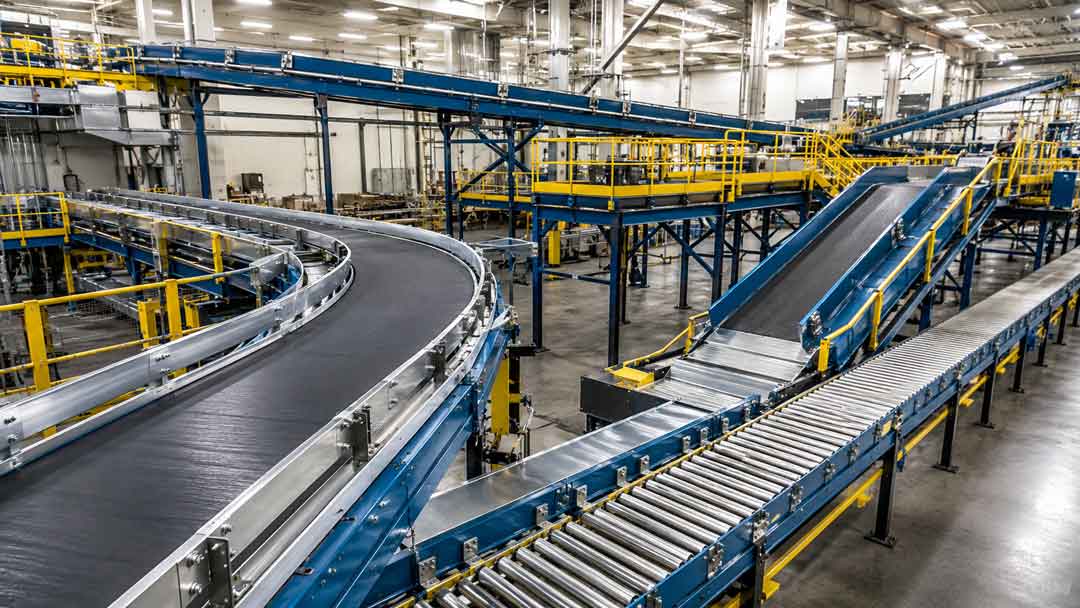
Finding the right conveyor equipment manufacturer in the United States means looking past sticker price to real value across your production line. As you evaluate options for Packaging Equipment, Rotary Equipment, Liquid Filling Equipment, and Capper Machine systems, the review should focus on three factors: upfront cost control, ongoing maintenance requirements, and long-term system uptime.
A successful system integration should support sanitation requirements commonly associated with FDA- and USDA-regulated production environments without sacrificing the custom fit or cleaning access requirements of the facility. In addition, stainless steel construction and UL-certified components provide clear indicators of build quality for regulated manufacturing operations.
Safety features should function as part of the overall equipment design because enclosed frames and smooth-contour construction support operational consistency and maintenance accessibility. In the same way, a history of successful installations often provides valuable insight into long-term equipment performance beyond specification sheets alone.
When evaluating both startup and long-term costs, manufacturers can focus on total lifecycle value rather than initial purchase price alone.
Assessing Initial and Long-Term Costs
Comparing early buy-in numbers for conveyor systems, manufacturers should evaluate both upfront investment and ongoing operating expenses. Industry research by Modern Materials Handling notes system prices in the U.S. often vary significantly depending on size, load requirements, and control configurations.
Startup costs may appear similar across suppliers at first glance. However, long-term operating expenses can exceed initial purchase costs, particularly when maintenance requirements and downtime are not considered during the evaluation process.
These costs often include energy consumption, production changeovers, replacement parts, and technical support. Downtime costs can vary significantly based on production volume, making maintenance planning, component quality, and service support important factors in total ownership cost.
Beyond equipment pricing, we recommend evaluating certifications, maintenance programs, and service accessibility. We also recommend reviewing a clear breakdown of labor, consumables, and support costs. This is why our conveyor systems for packaging facilities are designed to support long-term operational efficiency.
Checking Material and Build Standards
Material quality and build standards play a big role in how well conveyor systems perform and how long they last. When manufacturers evaluate these factors, they help ensure Packaging Equipment supports uptime, compliance goals, and daily production requirements.
- Engineering Standards Compliance: Each conveyor should be designed to meet applicable engineering and regulatory standards for its intended use. Compliance with UL, GMP, or FDA-related requirements can support operational consistency and inspection readiness.
- Stainless Steel and Build Material: Stainless steel and sanitary-grade materials help support cleaning procedures and sanitation requirements. For food, pharmaceutical, and cosmetic operations, material selection remains an important part of maintaining product integrity across production shifts.
- Welds, Joints, and Surface Quality: Frames and joints should be evaluated carefully to minimize areas where residue may accumulate. Smooth surfaces and quality fabrication support cleaning efficiency and routine maintenance procedures.
- Modular and Customizable Design: Systems built with modular sections support future upgrades and integration with existing production lines. The ability to add, replace, or adjust components provides flexibility as production requirements evolve.
Reviewing Safety and Regulatory Certifications
Checking materials and build quality naturally leads to reviewing the certifications that support the safety and regulatory suitability of Conveyor Systems. Certifications and approvals help verify that equipment has been evaluated against established standards.
- UL and Nationally Recognized Standards: UL-certified components and compliance with Nationally Recognized Testing Laboratory (NRTL) requirements demonstrate that key equipment components have been evaluated for electrical, fire, and mechanical safety considerations.
- Food and Pharma Compliance Documentation: For Packaging Equipment used in food, beverage, or pharmaceutical production, manufacturers should review documentation supporting sanitary design principles commonly associated with FDA, USDA, and GMP-regulated environments. These design features can support sanitation procedures, traceability programs, and audit preparation.
- Engineering and Modular Safety Credentials: Independent engineering reviews and modular design certifications demonstrate that systems support long-term operational flexibility, easier upgrades, maintenance accessibility, and operator safety considerations.
Comparing Customization Options for Packaging
The ability to customize Packaging Equipment influences everything from product handling requirements to facility layout efficiency. Purpose-built packaging solutions provide design flexibility that supports product-specific production goals.
Packaging systems may include moisture barriers, protective coatings, or HMI controls that reduce manual handling requirements and support sanitation procedures. Manufacturers may also select specialized containers, films, and coatings to address industry-specific requirements.
In addition, flexible options such as flat cartons can reduce storage space requirements compared to pre-glued alternatives. Custom Packaging Equipment can also support more efficient installation and changeover activities on the production floor.
Many manufacturers continue to adopt customized packaging solutions to support operational efficiency, production flexibility, and sanitation objectives. Each system should be designed around the facility’s production requirements, compliance objectives, and throughput goals.
Investigating Track Record and Client Feedback
Reviewing a manufacturer’s track record provides insight into real-world equipment performance. Industry growth within the U.S. conveyor equipment sector continues to reflect strong demand across manufacturing, warehousing, and distribution operations.
The Midwest remains home to a large percentage of domestic conveyor equipment manufacturers, making client experiences from that region particularly useful when evaluating equipment suppliers.
Valuable insights often come from production managers with hands-on experience using Packaging Equipment, Rotary Equipment, or a Capper Machine. Their experiences can help identify trends related to installation timelines, equipment reliability, and production flexibility.
For example, manufacturers often evaluate feedback regarding installation efficiency, delivery performance, and facility-specific customization. Client experiences can also reveal how Conveyor Systems and Liquid Filling Equipment perform during changeovers and within regulated production environments.
Careful review of real-world feedback can provide valuable information that extends beyond technical specifications and marketing materials.
Evaluating conveyor equipment manufacturers requires a balanced review of the factors that influence long-term production performance. A complete evaluation should consider lifecycle cost, operational consistency, compliance objectives, and overall system value.
GLOBALTEK® Conveyor Systems, Capper Machine solutions, Rotary Equipment, and Packaging Equipment incorporate UL-certified components and sanitary design principles commonly used in FDA- and USDA-regulated production environments. In addition, choosing a Made in the USA equipment partner can support supply chain consistency and service accessibility.
Our stainless steel construction, integration-ready controls, and modular equipment designs support daily production requirements across a wide range of industries. We custom-build every Conveyor System to match facility layouts, product specifications, and throughput objectives.
This approach supports facility-specific integration, efficient changeovers, and simplified maintenance procedures. GLOBALTEK® packaging and conveyor solutions are designed for regulated manufacturing environments where compliance, uptime, and operational consistency remain priorities.
Our engineering team focuses on supporting compliance objectives, production efficiency, and product consistency through integrated system design. For manufacturers seeking durable, compliant, and scalable Conveyor Systems, GLOBALTEK® delivers made-in-the-USA solutions engineered for long-term performance.
Comments
No posts found